Sci‑Fi Architecture in Blender: Greebles, Paneling, Arrays, Decals, and Scale Cues
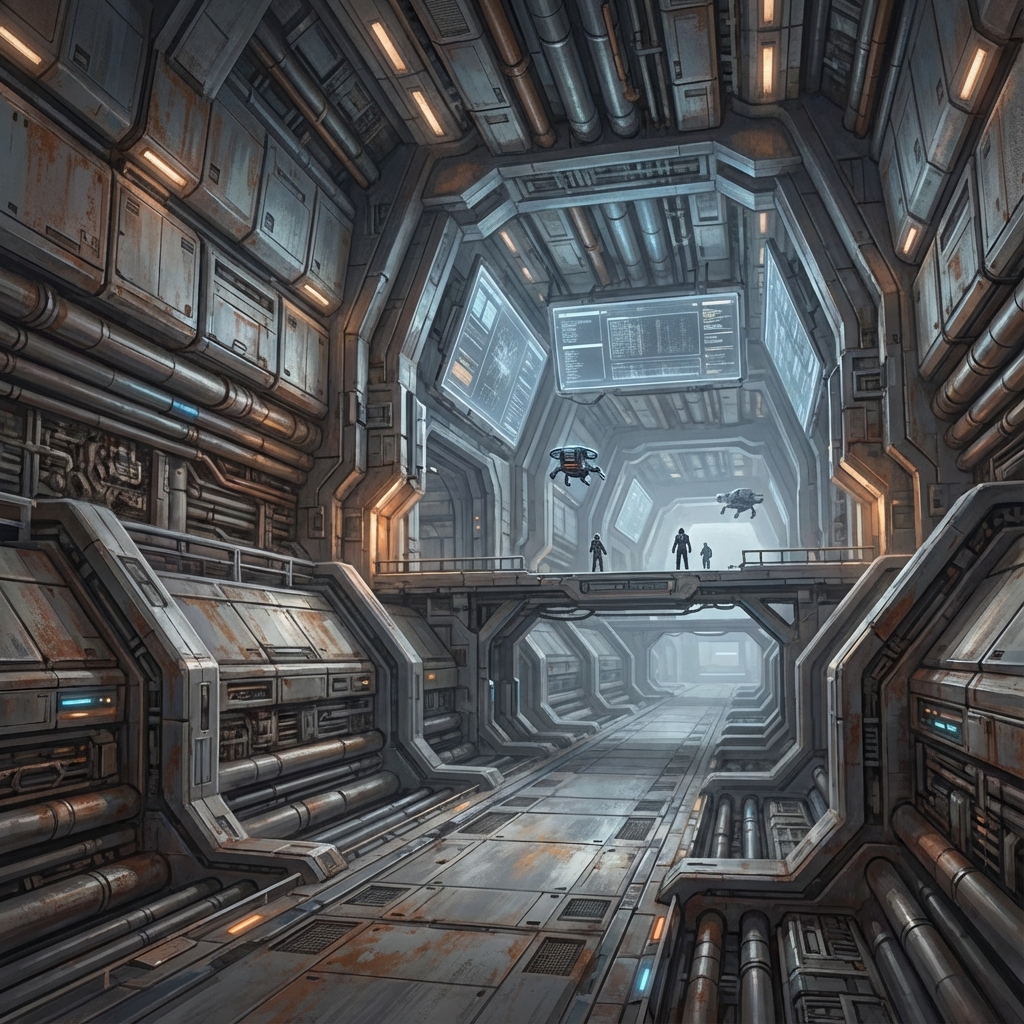
Sci‑fi architecture often starts as boxes. The difference between “basic blockout” and “production-ready concept art” is detail rhythm, functional logic, and scale cues.
This guide teaches high-demand workflows to make architecture look technologically plausible—fast.
1. The #1 Rule: Detail Rhythm (70/30 Rest Rule)
Beginners add detail everywhere. Pros choose where to concentrate complexity.
- Keep 70% of surfaces clean or low-detail.
- Put the majority of greebles and panel breaks in 30% of space.
Where detail belongs (functional zones)
- Seams and joints
- Maintenance hatches
- Structural transitions (wall → floor, pillar → ceiling)
- Around doors, vents, and docking areas
2. Greeble Hierarchy: Big–Medium–Small Applied to Buildings
Use BMS theory (readability first):
- Big: primary building masses, towers, buttresses
- Medium: bays, bridges, access corridors, vents
- Small: pipes, bolts, ribs, cable trays, signage
Pro tip: Small greebles should cluster—don’t evenly sprinkle.
3. Array Modifier: Instant Corridors, Facades, and Megastructures
Corridor workflow
- Model a single “slice” (wall/floor/ceiling module).
- Add Array Modifier:
- Relative Offset: ON
- X offset: set to module width
- Count: 10–50
Break repetition (pro workflow)
- Make 3–5 slices with variations.
- Put them in a Collection.
- Use Geometry Nodes to randomly place modules in a line.
4. Paneling Without Modeling: Decals + Shrinkwrap
You don’t need booleans for every panel line.
Decal workflow
- Create a plane.
- Apply a mostly transparent texture containing:
- panel lines
- warning text
- vents
- rivets
- Add Shrinkwrap Modifier onto the target surface.
Result: reads like geometry at a fraction of the time.
5. “Scale Cues” That Sell Massive Size
Sci‑fi shapes can be abstract. Scale cues make the brain understand size.
Reliable scale cues
- Railings ~ 1m tall
- Doors ~ 2.0–2.2m
- Stairs step height ~ 0.18–0.22m
- Human silhouettes (even tiny) on platforms
One railing can make a structure feel 100× larger.
6. Lighting and Composition for Architecture
Architecture needs readable value planes.
- Use a strong key to create directional shadows.
- Use rim light or haze for separation.
- Add atmospheric perspective for depth.
Exercises
- Box → sci‑fi: take one cube and add 3 levels of detail (big/medium/small).
- Corridor speedrun: build a 30m corridor using 1–3 slices and an Array.
- Scale test: add railings + tiny people and compare before/after.
Conclusion
Sci‑fi architecture is a design problem: rhythm, function, and scale. With arrays, decals, and smart greeble clustering, you can turn simple primitives into megastructures that feel believable—and cinematic.
Next and Previous
- Previous: Organic Environments: Procedural Workflows in Geometry Nodes
- Next: Mist Pass in Blender: Z‑Depth Workflow for Atmospheric Perspective in Photoshop